Cellular Respiration study song
Quick answer
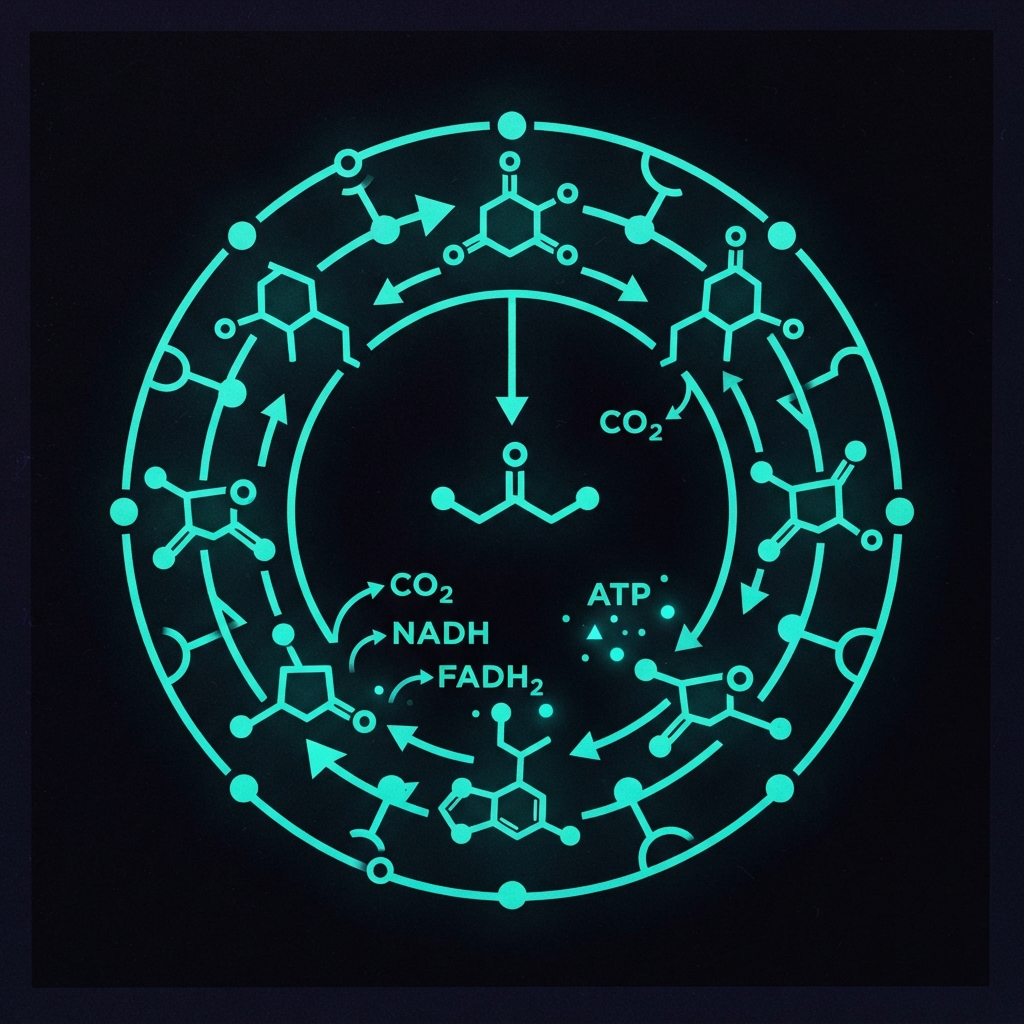
Cellular respiration is the set of reactions that release energy from glucose and store it as ATP, the cell's usable energy currency. In aerobic respiration it runs through four stages: glycolysis, pyruvate oxidation, the Krebs cycle and the electron transport chain.
Exams ask where each stage takes place, how many ATP each yields, and what happens when oxygen is missing and the cell must ferment instead. Candidates often lose marks by confusing the net ATP from glycolysis with the total from the whole process. Setting the stages to a steady beat helps you keep the order straight, and a repeated chorus can carry the headline numbers, so they are easy to recall when the question appears.
5 facts to know about cellular respiration
- 1The overall equation is C6H12O6 + 6O2 -> 6CO2 + 6H2O + ATP.
- 2Glycolysis occurs in the cytoplasm and nets 2 ATP and 2 NADH per glucose.
- 3The electron transport chain on the inner mitochondrial membrane makes the most ATP, with oxygen as the final electron acceptor.
- 4Aerobic respiration yields roughly 30 to 32 ATP per glucose molecule.
- 5Without oxygen, animal cells ferment pyruvate to lactate and yeast ferments it to ethanol and CO2.